Summary:
At sixteen, Mia is finally starting to feel like she is not broken.
For as long as she can remember, her brain has been loud in all the wrong ways. Primary school was a blur of sitting alone at lunch, saying the wrong thing in group projects, and going home with a stomach ache that was really just anxiety with nowhere to go. High school only turned the volume up. Every hallway whisper felt like it was about her. Every mirror felt like an enemy. Every friendship felt temporary, like people were just waiting to notice how “too much” or “too quiet” she really was.
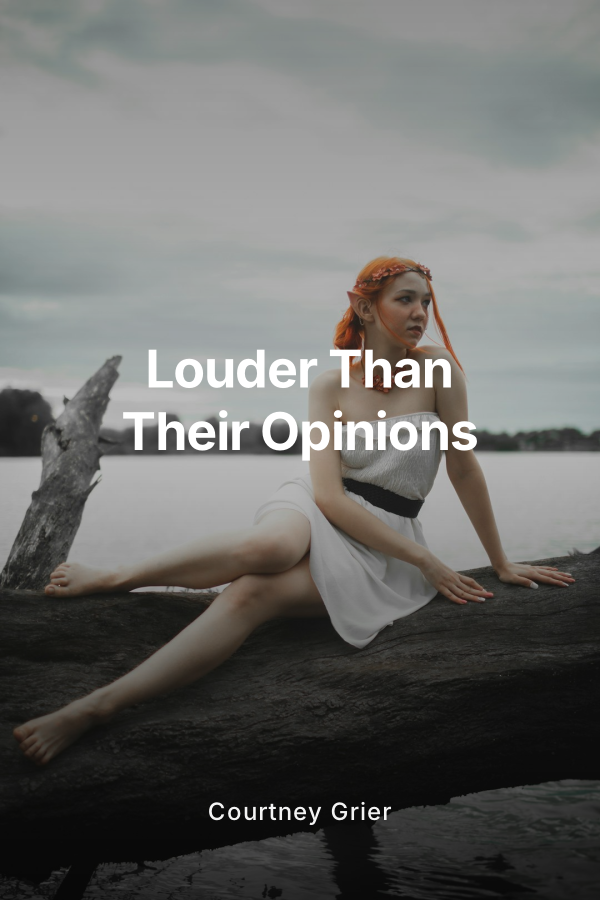
“Louder Than Their Opinions” follows Mia through the messy, honest journey of growing up with a mind that will not give her a break. She overthinks every text, replays every awkward moment at 3 a.m., and worries that if people knew how bad it really gets in her head, they would leave. She has learned to hide everything behind a half smile and a joke that lands a little too late.
When her anxiety finally crashes into a wall she cannot ignore, Mia does something she has never done before: she tells the truth. First to a school counselor who sees straight through the “I’m fine.” Then to a teacher who notices when she goes quiet in class. Slowly, painfully, she starts talking about what is really going on inside her chest. The panic. The heaviness. The constant fear that she is a burden.
Around the same time, something unexpected happens. She stumbles into a small group of people who do not treat her like a project or a punchline. They are not perfect. They mess up, get jealous, say the wrong thing sometimes. But they are real. A girl from art class who loves weird playlists and late night walks. A boy who cracks jokes but also asks, “No seriously, how are you?” A friend who has been through their own mental health storm and is not scared of Mia’s.
This book zooms in on the quiet turning points that actually change Mia’s life. The panic attack in the bathroom where she decides to text someone instead of pretending she is okay. The lunchtime where she sits with her new friends and realises no one is watching her every move, and even if they are, it does not matter as much as she thought. The therapy session where she learns her thoughts are not facts, and maybe the cruel voice in her head is not the truth about her.
“Louder Than Their Opinions” is not a fairytale where everything suddenly becomes perfect. Mia still has bad days, spirals, and late night overthinking. People still gossip. Some friendships still fade. Her family does not magically understand everything. But as she learns to open up, set boundaries, and actually believe the people who say they care about her, the balance shifts. Her mental health starts to rise from survival mode to something that looks a lot like living.
The story explores:
- What it feels like to grow up constantly worried about what everyone thinks, and how that pressure seeps into friendships, school, and self worth
- The way isolation can become a habit, and how terrifying and freeing it is to let someone see the real you
- The impact of finding the right people to talk to, from professionals to friends who listen instead of judge
- The difference between shallow friendships that drain you and real friendships that help you heal
- The slow, believable process of getting better, not in a straight line, but in small, powerful moments
Told in a raw, relatable voice, this book speaks to anyone who has ever felt like too much, not enough, or both at the same time. It does not glamorise pain or pretend that one conversation fixes everything. Instead, it shows the courage it takes to keep choosing yourself, even when your own mind tells you not to.
By the time Mia reaches sixteen, she has not “defeated” her mental health struggles. But she has language for them. She has tools. She has people. Most importantly, she has a new belief forming quietly inside her: that she deserves friendships that feel safe, love that does not make her shrink, and a life that is louder than other people’s opinions of her.
“Louder Than Their Opinions” is a story about the kind of bravery that does not look dramatic from the outside: sending the first text, asking for help, saying no, staying, leaving, and choosing to believe that you are worth the space you take up. It is a reminder that healing is not about becoming someone else. It is about finally becoming yourself, and finding the people who are glad that you did.