Summary
On HypnosMC, a popular private Minecraft server, the monthly “Hidden Killer” event is the highlight of everyone’s calendar. Custom plugins, proximity voice chat, and a tight-knit adult friend group turn each round into a chaotic social experiment where trust rarely survives the night. Players scatter across a sprawling custom map, complete tasks, and pray the killer is not standing right behind them when their headset crackles to life.
Piffin has carved out a reputation on HypnosMC as the anxious strategist: clever with redstone, deadly in PvP when cornered, and absolutely merciless in voice chat. There is one person who gets under his skin every time. JDFgamer, the server’s golden boy, is charismatic, mechanically gifted, and infuriatingly good at reading people. Their rivalry is legendary, a running joke across the community: Piffin the salty tactician and JDF the smug showman, always baiting each other in every game mode.
When a new season of the Hidden Killer event launches with updated rules and proximity chat turned to maximum chaos, both sign on without hesitation. This time, the plugin randomly assigns one player as the killer, able to “eliminate” others in-game and shift blame in tense meetings at spawn. Eliminated players respawn as spectators, free to eavesdrop on voice channels and watch the paranoia spread.
Piffin’s chapters pull readers directly into his headset: the echo of footsteps in a dark corridor, the moment proximity chat pops as another player’s voice slides too close, the electric thrill of accusing someone at spawn while everyone talks over each other. For him, the danger is still a game, but the feeling of being hunted is real enough that his hands shake on his mouse. His rivalry with JDF is his favorite armor. So long as they are sniping at each other, nobody can see how scared he actually is.
JDF’s chapters peel back the performance. From his point of view, we see the Hidden Killer from the inside. When the plugin hands him the killer role, a fantasy he has half-jokingly campaigned for, JDF should be ecstatic. Instead, he feels a jolt of something uncomfortably close to responsibility. He loves the game, loves the lies and the laughs in proximity chat, but he also knows who on the server is more easily rattled. Piffin tops that list. What begins as a simple goal not to “hard-focus” his favorite rival turns into a slow, obsessive tracking of Piffin’s footsteps across the map.
As bodies fall and eliminated players watch from the sidelines, Piffin and JDF dance their usual line in voice: taunts, accusations, and quick, sharp banter that everyone else swears sounds a little too charged. The dual POV structure lets the reader watch their dynamic from both sides. Piffin is convinced JDF only plays up the rivalry because it makes good content. JDF, privately, has been nursing an inconvenient crush that he hides behind louder insults and sharper plays.
The turning point arrives in a silent wing of the custom map, far from spawn. Piffin, separated from the others, slips into a narrow corridor to finish a task, only to hear prox chat click as JDF’s voice fades in behind him. Before he can fully turn, Piffin watches JDF “kill” another player at close range. The bright, clean in-game animation is still enough to punch the air out of him. The killer has a face now. It is the one he has been arguing with for months.
Piffin’s panic is immediate and visceral. Instead of running to spawn to shout the truth, he bolts into the dark, proximity chat fluttering as he flees. He hides behind pixelated walls with very real trembling hands, breathing too fast into his mic he forgets is active. JDF, from his side, realizes in a split second that Piffin has seen everything, and the hunt that follows is no longer just about winning the round. It is about not letting the one person he cares far too much about be terrified of him.
The climax of the event is not a dramatic meeting at spawn but a quiet, charged confrontation in one of the map’s forgotten corners. JDF corners Piffin against a stone wall, their avatars inches apart, proximity chat capturing every ragged breath and shaky word. The scene walks a sharp line between fear and intimacy. Piffin flinches, voice cracking, while JDF sees for the first time just how deeply his “killer” persona has cut. He backs off. He apologizes. He asks permission before he steps closer again, this time not as the killer, but as the rival who might want to be something more.
From there, the emotional stakes leave the game entirely. The round ends. The event concludes. In the lobby and then in private calls, the two of them rebuild trust in halting, tentative sentences. They argue, because that is what they know how to do, but somewhere in the middle of trading blame and confessions, the old rivalry bends into something softer and more dangerous. The first kiss lands like a misclick that was waiting to happen. Physical intimacy follows off-page, intense and consensual, reshaping how they speak to each other once they log back into HypnosMC.
The later chapters expand the world of the server as their relationship evolves. The wider friend group is chill, unbothered by lewd banter, and quick to tease when JDF and Piffin’s proximity chat slips from cutting to openly suggestive. Morning-after jokes about sore backsides and who is “to blame” spark blushes from Piffin and smug deflection from JDF. Flirty trash talk becomes an ongoing bit, layered over their old rivalry until it is almost impossible for anyone to tell where mock arguments end and genuine affection begins.
At the same time, the story remains grounded in emotional realism. Piffin’s fear from that first event does not vanish overnight, and the book gives space to quiet late-night check-ins where he admits how shaken he really was. JDF, who once treated the killer role as a harmless persona, wrestles with guilt and the responsibility he carries when his playstyle brushes too close to his partner’s anxieties. One deeper argument crystallizes the theme of boundaries: what is fun in a game, what feels like too much, and how communication can turn a risky dynamic into a safe, shared thrill.
Throughout, proximity chat functions almost like a third character. It amplifies misunderstandings, captures stray confessions when someone forgets they are not muted, and turns the digital distance between them into something paradoxically intimate. They are apart, sitting at their own desks, yet every sigh and laugh is in each other’s ears. The server’s custom arenas and spawn meetings give the book a vivid, playful backdrop, blending tense “who is the killer” sequences with the messy complexity of adult relationships forged online.
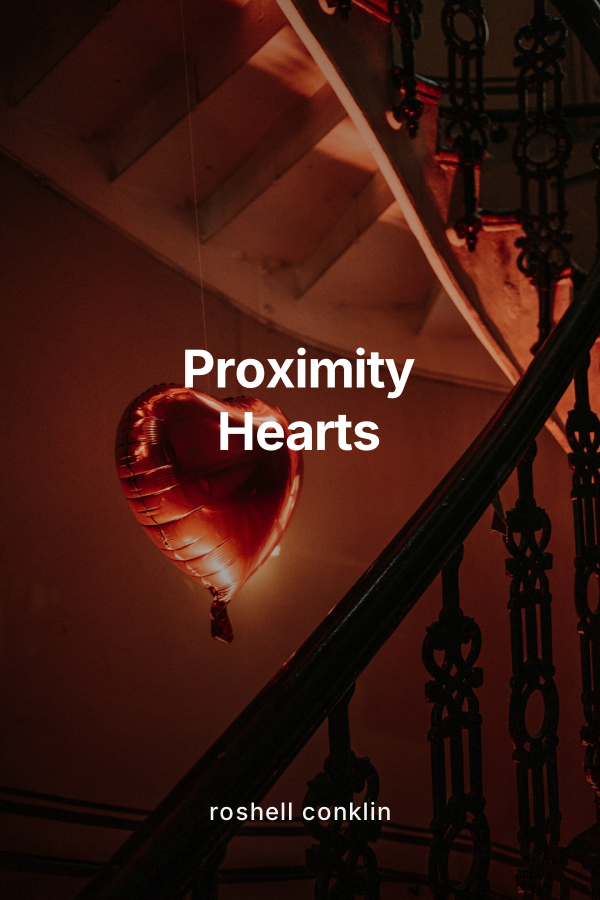
“Proximity Hearts” is a character-driven, adult rivals-to-lovers romance built around the structure of a Minecraft social deduction game. It explores how performance and persona blur in online spaces, how danger can feel real inside a safe virtual frame, and how two stubborn, sharp-tongued players learn to trust each other without losing the edges that first pulled them together. The result is tense but emotionally safe, horny yet humane, and deeply rooted in the specifics of modern gaming culture.
By the end, Piffin and JDF stand side by side at spawn, queued for another round of Hidden Killer. The plugin could choose anyone as this night’s murderer. Their friends place bets in proximity chat, half on the outcome of the game, half on how long it will take before the bickering rivals forget anyone else is listening. Whatever happens in this next event, one fact is fixed: Piffin no longer has to face the server alone, and JDF’s favorite opponent has finally become his favorite person.