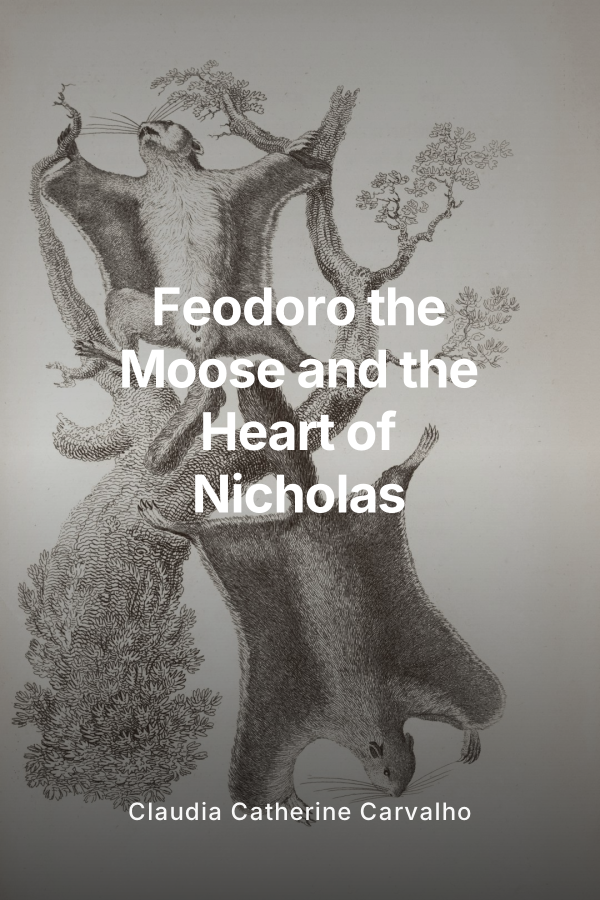
Book Summary
On a quiet May night in 2014, something wonderful happens in a softly glowing room. A baby named Nicholas is born, and on that same magical day, his plush moose toy opens his stitched eyes for the very first time. The family will always remember this date, 28 May 2014, as the day Feodoro the Moose came to life to guard Nicholas’s heart, guide his steps, and whisper simple, steady truths about love, family, friendship, and God.
Told by Nicholas’s loving Auntie Claudia, this gentle, richly detailed picture-book unfolds in a series of connected mini-chapters that follow Nicholas as he grows from a tiny baby into a questioning teenager. Feodoro is there through it all, wise and playful, with soft fur, kind eyes, and a very special job: to help Nicholas keep his heart soft and pure and to remind him, again and again, “You can always talk to Jesus.”
The story begins on Nicholas’s first night at home, when the house is quiet and shadows seem tall. As Nicholas cries and wiggles in his cradle, Feodoro secretly comes to life. In the warm glow of the night-light, he watches over the baby and listens as Grandma Marlene and Mom Christiane whisper a simple prayer. Auntie Claudia leans close to the reader, sharing the secret that on this magical birthday, God placed a gentle guardian in the form of a plush moose right beside Nicholas’s pillow.
From there, each mini-chapter is a small adventure and a lesson of the heart:
• In the early days, Grandma Marlene, full of faith and hugs, rocks Nicholas in her favorite chair. Sometimes she catches a glimpse of Feodoro’s tiny ear twitching or his button eyes shining a little more than they should. With a childlike, happy heart, she somehow knows this toy is more than just stuffing and stitches, and she treats Feodoro with the same kindness she shows every person she meets. Auntie Claudia explains to the reader that some hearts, especially those filled with faith and empathy, see more than others can.
• On Nicholas’s first day of school, he feels small and alone in a big, noisy classroom. At recess, he clutches Feodoro in his backpack and wishes he had a friend. In a quiet corner of the playground, something magical happens. For a moment, to Nicholas and to another child with a pure and trusting heart, Feodoro steps out of “toy” and into “real.” He moves, he speaks, and he shares a simple, powerful truth about friendship, including the line, “A friend who sticks closer than a brother,” which later can be properly attributed. With Feodoro’s encouragement, Nicholas learns that true friends are kind, and that Jesus is the closest friend of all.
• At bedtime, when the house is dark and worries creep in, Feodoro teaches Nicholas how to pray in ways a young child can understand. Together they whisper short, honest words like, “Jesus, stay with us tonight.” Feodoro shares simple faith phrases such as, “I have been talking to Jesus. You can always talk to Jesus.” Auntie Claudia speaks directly to the child reading or listening, inviting them to try the same kind of quiet, cozy conversation with God when they feel afraid.
• During warm Sundays after church, Nicholas joins his family for lunch at Grandma Marlene’s house. They gather around the table, give thanks for food and for each other, and sometimes later light a candle at church, holding hands in a silent moment of prayer. Feodoro gently nudges Nicholas to notice the love that fills these times: the laughter of Uncle Wendell, the careful love of Mom Christiane, the patient, prayerful presence of Auntie Claudia, and the way Grandma smiles with faith in her eyes. Through these scenes, Nicholas begins to understand that family is a special gift from God and that love is God’s gift in his heart.
One of the longest and most tender chapters comes when Nicholas faces his first deep loss. His beloved cat, Buddy, grows ill and passes away. Nicholas’s sensitive heart cracks with grief. He misses Buddy’s paws, his sounds, his favorite sleeping places. At first, Nicholas does not know what to do with such a big sadness. In quiet moments on Grandma’s special chair and on the living-room floor, Feodoro sits beside him. With playful gentleness and wise words, he helps Nicholas put his tears into simple prayers. He explains, in language a child can carry, that loving pets is part of the love God places inside us and that it is all right to feel both sad and grateful at the same time. Buddy’s memory becomes a doorway to cherish the four cats who still pad around the house: Casper the white cat, Maggie the calico queen, Tico the sleek black watcher, and Oliver (nicknamed Oreo), the fluffy Persian. Through this loss and these living friendships, Nicholas learns that love does not end, it deepens.
Throughout the years, Feodoro remains a steady, playful companion. He hides among the cats, listens to school worries, and echoes simple phrases that anchor Nicholas’s faith in everyday life: “You can always talk to Jesus” and “Love is God’s gift in your heart.” Sometimes other children with pure hearts catch a glimpse of Feodoro moving or talking. Sometimes only Nicholas sees. Grandma Marlene, with her childlike soul, senses his magic from the beginning. These openly magical moments sparkle through the story, reminding readers that God often uses the things we least expect to comfort and guide us.
The story reaches its quiet climax when Nicholas becomes a teenager. He is taller now, with stronger opinions and bigger questions. He begins to pull back from his mother’s and grandmother’s guidance, pushing against their rules and their faith. There are tense conversations and silent dinners. Nicholas wonders why life is not simpler, why losses happen, why he must listen to old lessons about God. For a while, he almost stops believing. Feodoro, worn and faded from years of cuddles, waits patiently on a shelf, his stitched heart heavy with concern.
Then comes a turning point. In a moment heavy with doubt and distance, Nicholas walks into Grandma Marlene’s living room and sees something he has not seen since he was small: Grandma and Feodoro together, fully alive in front of his eyes. Grandma’s face shines with the same happy faith as before, and Feodoro’s gentle voice, heard openly once more, cuts through the confusion. In that room, beside the special chair where so many prayers were whispered, Nicholas remembers. He remembers the magical night of his birth, the first day of school, Buddy’s soft fur, the light of the church candles, the warmth of Sunday lunches, the love of his family, and all the times Feodoro reminded him to talk to Jesus.
With tears that he no longer tries to hide, Nicholas sits with his grandmother and Feodoro. Together they share a short, sincere prayer, and in a quiet voice Nicholas admits, “I do still believe.” He reaches for his mother and grandmother in a simple, healing hug. The hard edges of his anger soften as he chooses, again, to keep his heart open.
In the final pages, Auntie Claudia turns her attention fully to the child holding the book. She explains that just as Feodoro watches over Nicholas, God watches over them too. She slips in the truths that have guided every chapter: that love is God’s gift in your heart, that family and friends are treasures, and that even in sadness and questions you can always talk to Jesus. Feodoro’s last promise on the page is gentle and wide. He will keep watching over Nicholas, and he will watch over every child who keeps a soft and trusting heart.
Feodoro the Moose and the Heart of Nicholas is a warm, magical picture-book for ages 3 to 8, filled with cozy scenes, faith-filled moments, and playful wonder. Through softly lit bedrooms, schoolyard jitters, furry companions, family tables, and teenage doubts, children discover that God’s love is near in both the smallest and biggest moments of life. The story closes with the words, “You can always talk to Jesus,” and a hint that Feodoro’s adventures with Nicholas, and with every child who believes, are not finished yet.
The end…for now.