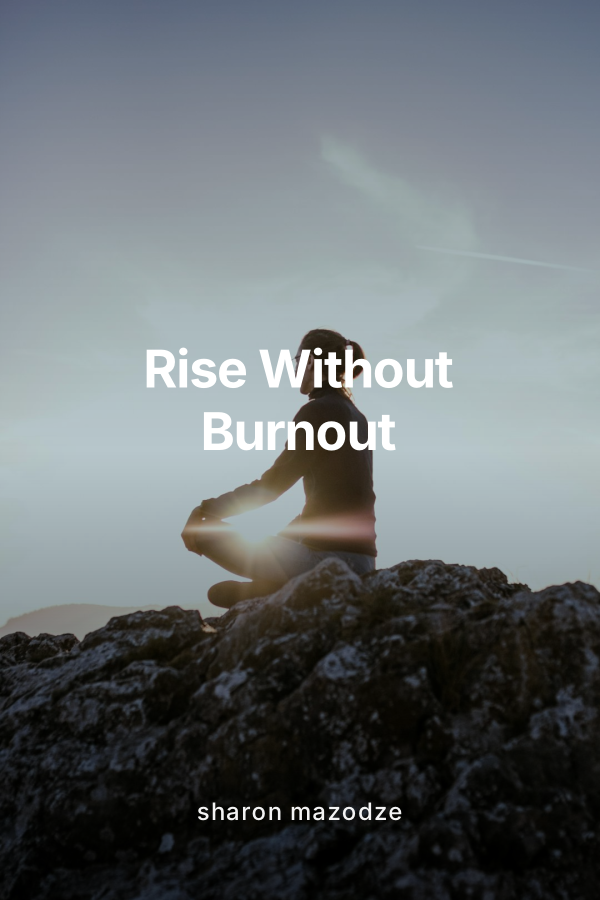
This book is a focused, action oriented roadmap for people who want to achieve more without quietly destroying their health, joy, or relationships in the process. It speaks to the high performer who is tired of swinging between overdrive and collapse, who longs for meaningful success that does not require constant self sacrifice.
Across five concise, powerful chapters, the book traces a journey from unconscious overwork to intentional, sustainable achievement. It treats burnout not as a personal failure, but as a predictable result of unclear priorities, inherited beliefs about success, and a lack of practical tools for managing energy, attention, and emotion under pressure.
The opening chapter uncovers the hidden drivers behind chronic exhaustion and overwhelm. Readers examine the stories they carry about work, worth, and productivity, and how these stories quietly shape their schedule, decisions, and even physical health. Through simple reflection exercises, they pinpoint the personal patterns that keep them stuck in cycles of doing too much, too fast, for too long.
The second chapter shifts from awareness to clarity. Instead of setting vague, guilt fueled goals, readers learn a structured approach to defining what success means in this specific season of life. The book offers practical tools for choosing one main direction, breaking it into concrete outcomes, and aligning daily actions with long term priorities. By the end of the chapter, readers have a living framework that guides what to say yes to and, more importantly, what to confidently decline.
The third chapter focuses on energy management as the foundation of sustainable performance. Rather than relying on willpower or sporadic motivation, readers learn how to design a personal energy system. This includes realistic approaches to sleep, focus, movement, and recovery, tailored for ambitious people who feel “too busy” for self care. The chapter introduces workable routines that can be implemented in minutes, not hours, and shows how small, consistent shifts compound into remarkable gains in clarity and stamina.
The fourth chapter addresses the inner game. It explains how stress, perfectionism, and fear of failure quietly sabotage progress, and it offers direct, step by step mental tools to handle pressure without shutting down or lashing out. Readers practice simple methods to reset during tough moments, communicate needs without guilt, and build confidence through action rather than endless planning. Practical scripts and examples help them navigate difficult conversations at work and at home as they renegotiate expectations and boundaries.
The final chapter brings everything together in a practical integration plan. Instead of leaving readers inspired but directionless, the book walks them through a ninety day implementation roadmap. They learn how to build new habits without relying on motivation, how to monitor progress without obsessing over perfection, and how to adjust the system when life changes. The chapter closes with a future oriented view, showing how to keep growing, striving, and contributing while remaining grounded, healthy, and present.
Throughout the book, exercises, checklists, and real world examples invite readers to apply each concept immediately. The tone is firm yet compassionate, focused not on abstract inspiration but on clear, repeatable actions. By the end, readers are equipped with a personal blueprint for rising in their career, business, or creative pursuits while protecting the two assets that matter most: their well being and their sense of self.
Rise Without Burnout is not about choosing between ambition and peace. It is a practical guide to building a life in which both can thrive.