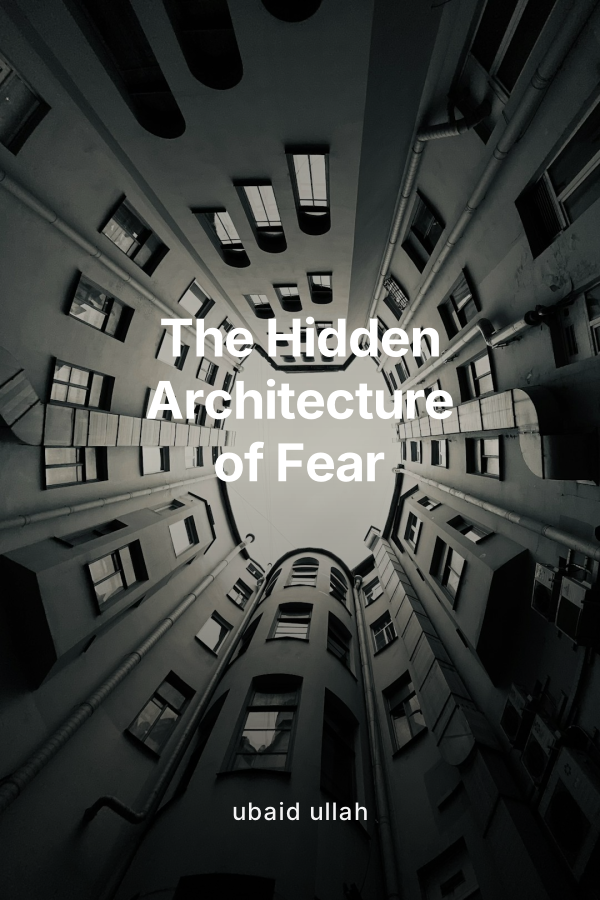
This book uncovers fear as a finely tuned psychological system rather than a mere burst of panic. It explores how conscious worries and buried trauma quietly influence perception, memory, and decision making, scripting our reactions long before we notice a racing heart or a sudden chill. By tracing fear from its evolutionary roots to its most modern expressions in horror stories and psychological terror, the book reveals how deeply anxiety is woven into the way we think, feel, and relate to others.
At the heart of the book is the idea of fear as an internal storyteller. Hidden anxieties function like a background narrator that constantly interprets the world, assigning meaning, risk, and threat. Old emotional wounds shape this narration. A single criticism can feel life threatening to someone whose early experiences linked love with rejection, and a small uncertainty can spiral into catastrophe for a mind trained by past chaos. By examining these patterns, the book shows how fear colors everyday choices, from relationships and work to creativity and self image, often without our awareness.
The first movement of the book maps out this inner landscape. It looks at how fear originates, how it is learned, and how it embeds itself as automatic associations. Readers are introduced to the building blocks of fear responses: bodily arousal, survival-focused thinking, and rapid emotional shortcuts. The book then traces how trauma intensifies and distorts these components. Instead of fading into memory, terrifying experiences may remain active in the nervous system, resurfacing as flashbacks, nightmares, or sudden surges of dread when certain cues appear. This section highlights how the mind tries to protect itself through avoidance, numbing, or hypervigilance, and how these defenses can quietly steer thoughts and behaviors for years.
The second movement turns to the shadowy side of imagination. It investigates why so many people willingly seek out horror, scary stories, and psychological thrillers. On the surface, this seems contradictory: a mind built to avoid danger voluntarily walking into it. The book explains how controlled exposure to fictional fear can offer a paradoxical sense of safety. Within the boundaries of a story, the threat is contained in time and space, which allows the mind to confront feelings of vulnerability, mortality, and chaos without real-world consequences. Horror becomes a mental laboratory where the psyche rehearses survival, mastery, and meaning-making in the face of what is frightening.
Within that laboratory, the book explores how psychological terror works differently from simple shock or gore. Psychological horror does not rely on what is seen but on what is suggested. It targets uncertainty, moral ambiguity, and the instability of identity and reality. The mind fills in the gaps with its own fears, making personal history and unresolved anxieties part of the experience. The book examines techniques such as ambiguity, unreliable perception, and slow-building dread, showing how they engage deeper cognitive and emotional processes. It reveals why subtle sounds, slight inconsistencies, and half-understood threats can be more unsettling than obvious danger: they bypass rational defenses and tap directly into the imagination.
Another key thread is the way fear shapes attention and memory. The book shows how anxious minds scan the environment for danger, sometimes seeing patterns that are not there, and how trauma can bias memory toward threat-related details. Readers learn how this skewed attention not only keeps fear alive but also influences personal narratives. Events are remembered and told in ways that reinforce underlying beliefs about safety, worth, and control. By understanding these mental filters, readers can begin to notice how their own histories may be editing their perception of the present, making ordinary experiences feel charged with unease.
The book also delves into the social dimension of fear. It looks at how shared anxieties collect into cultural myths, urban legends, and common horror themes. These stories often reflect collective concerns about technology, disease, outsiders, or moral decay. The popularity of certain types of horror can reveal what a society currently dreads or refuses to face directly. At the same time, consuming horror together, whether through films, games, or stories, offers a ritualized way to acknowledge these fears and symbolically confront them. The book traces how this communal experience of fear can create bonds, foster empathy, and provide a release of tension.
As the narrative unfolds, the focus returns repeatedly to personal transformation. Rather than portraying fear as an enemy to be eliminated, the book presents it as a guide that can be listened to, understood, and reshaped. It discusses how awareness of hidden anxieties and trauma patterns allows people to respond more flexibly, rather than simply reacting. By bringing unconscious fear scripts into conscious view, individuals can begin to rewrite them, choosing new ways to interpret bodily sensations, uncertain situations, and reminders of past pain. Horror and psychological terror, once sources of pure discomfort, can become mirrors that reveal what most needs healing.
In its final movement, the book offers a vision of a more integrated relationship with fear. It suggests that the goal is not to live without anxiety but to develop a more nuanced dialogue with it. When fear is neither blindly obeyed nor harshly suppressed, it can signal genuine danger, highlight unmet needs, and inspire preparation and growth. By combining insights from the psychology of fear, the impact of trauma, and the strange allure of horror, the book invites readers to see their inner terrors with new clarity. Rather than being haunted by unseen forces, they can learn to recognize the architecture of their own fear and move through life with greater courage, choice, and self understanding.