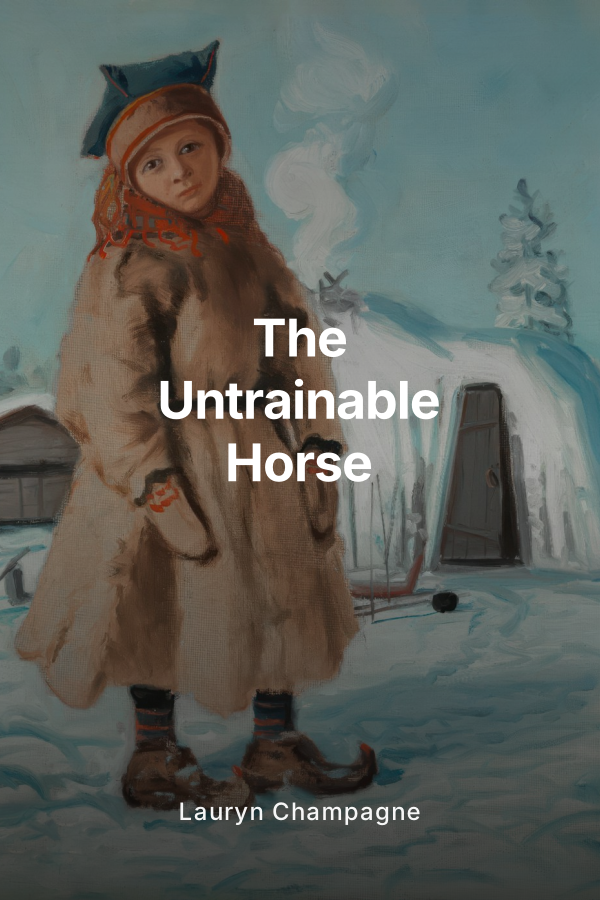
The Untrainable Horse is a coming‑of‑age ranch story for teens and adults that begins with two restless twin girls scrolling horse ads and ends with one of them standing on the edge of motherhood, her hand on the neck of a once “untrainable” mare and her whole future about to shift. It follows Lauryn and her twin sister Brooklynn as they fall in love with two neglected paint mares, Bessie and Louise, and with an unpredictable life built around horses, hard work, and a love that quietly grows over years.
When Lauryn and Brooklynn first see the online listing for two paint mares that have gone untouched for more than three years, they are sure they have finally found their dream horses. At the farm, they meet Bessie, the brown mare with wary eyes, and Louise, the white mare with skittish energy. The sisters can see every sign of long neglect in the overgrown hooves and moody temperaments, but they choose to believe in what the horses could become instead of what they are. They talk their parents into buying the mares, imagining that getting them home will be easy. It is not. The trailer‑loading scene turns into a test of stubbornness and courage as Bessie explodes out of the trailer in panic, ropes snap, and everyone has to try again and again in the dark. Only a last‑minute plan in the round pen, with the whole family hauling on a jagged rope, finally convinces Bessie to leap inside and ride three hours home to a new life.
From that exhausting night forward, the ranch and its horses become the heart of the book. Mornings start before sunrise and end with the twins falling into bed smelling of hay and sweat. Their older brother Cylas is the first to test the mares under saddle, moving slow and steady to see what the horses remember from the few rides in their mysterious past. The mares stand quiet while he tacks up and mounts, but their history of being ignored and under‑maintained shows up in every flinch, every hesitation, every fight over small cues. Lauryn and Brooklynn learn that real horsemanship is not just riding on good days. It is standing in the cold to hold a hoof for the farrier, pushing past fear when a horse bolts, and showing up again the next morning when yesterday went badly.
Over twenty‑one chapters and at least one hundred eighty pages, the story follows Lauryn from a horse‑crazy girl to a young woman whose identity is tied to the land, the animals, and the people she loves. The training of Bessie and Louise is never just technical instruction. Every breakthrough with the mares mirrors something shifting in Lauryn herself. As she coaxes Bessie to accept touch, tack, and finally trust, she is also learning to face her own fears about failure and the future. Bessie, the brown mare who once seemed determined to escape every rope, gradually becomes Lauryn’s favorite horse, the partner she chooses for her hardest rides, the one she confides in when life feels too heavy for words.
Woven into the grit of everyday ranch work is a slow, tender love story shaped to match your vision. As children, Lauryn and Brooklynn meet a boy on a neighboring place, a dark‑haired kid who is unexpectedly gentle with skittish horses and quick to help without being asked. Lauryn keeps a quiet crush on him, but time and distance pull them apart. Years later, when their dad hires a new ranch hand in his twenties to help manage the workload, Lauryn recognizes him at once as that long‑ago boy. He has grown into a muscular, hardworking man, still soft‑spoken, still a gentleman in how he speaks to her mother, respects her father, and moves calmly among high‑strung horses.
Their relationship grows the way a wild horse gentles down: small steps, long silences, shared work that says more than words. At first they circle each other as strangers who share memories only one of them dares to mention. Soon they are mending fences side by side, riding out together to check pastures, and talking in low voices over grain buckets and late‑night barn chores. The romance remains clean and rooted in real life. There are moments of shy laughter, hands brushing when they pass a lead rope, a first kiss under the hard field lights after a long day when exhaustion strips away their defenses. By the time they marry, their love has been tested by sick horses, money worries, and the thousand small disagreements that come with sharing both a home and a workload.
Marriage does not pull Lauryn away from horses. It presses her more deeply into them. The ranch slowly shifts from being her parents’ project to the foundation of the family she is building with her husband. The book shows this through small domestic details instead of speeches: two coffee mugs on the counter before dawn, his jacket hanging next to hers in the mudroom, their quiet arguments over training methods for a difficult colt, and the way those arguments end with compromise in the barn aisle instead of slammed doors in the house. Some of the most intimate scenes involve three hearts instead of two, with Bessie standing between them while they talk through fears they can barely admit to themselves.
Throughout the story, Bessie remains central. She is no longer the mare who breaks ropes and fights the trailer. She carries Lauryn through thunderstorms, over rough country, and into the quiet corners of the property where Lauryn goes to think. She is the horse under Lauryn on the day a crucial decision about the ranch’s future must be made, and the one who listens with flicking ears when Lauryn vents about the strain of adult responsibilities. What began as a risky purchase of a neglected brown mare grows into a partnership that anchors Lauryn through every season of change.
The final stretch of the book draws together the horses, the marriage, and the ranch into a single turning point. Lauryn has spent years pouring herself into the land and animals, surviving setbacks that made her question whether the dream was worth it. Just when life feels almost stable, subtle changes in her body and energy hint that something new is coming. At first she shrugs it off as exhaustion from long days, but the hints build until she cannot ignore them. Privately, away from the noise of the family house and the familiar rhythm of the barn, she faces the truth. In a moment as quiet and intense as the night Bessie finally leaped into the trailer, Lauryn discovers she is pregnant.
The book ends on a deliberate cliffhanger that matches your wish for a hopeful yet unfinished close. The last scene holds Lauryn between past and future. She has not told anyone yet, not even her husband. She walks out to the pasture, drawn to Bessie as she always is when her thoughts are too big to handle. With one hand resting on the mare’s warm neck and the other over the small secret of her own body, she looks out over the ranch that shaped her from girlhood. The untrainable horse now stands calmly at her side, living proof that patience and love can turn fear into trust. Lauryn realizes that every hard lesson with Bessie, every early morning and late night, was preparing her for a new kind of unknown.
Teen and adult readers are left right at that edge. They know Lauryn and her husband will face the uncharted territory of parenthood while still juggling the unpredictability of horses and the demands of a working ranch. They can imagine family reactions, the challenges ahead, and what it will mean to raise a child in the same wide‑open spaces that raised Lauryn. But the book does not show any of that yet. It closes in that single held breath of possibility, offering a happy ending that is also a beginning and inviting readers to step into the next part of the story in a future volume.
The Untrainable Horse is more than a horse story. It is a portrait of second chances, from half‑wild mares and rekindled childhood crushes to a young woman who discovers that the biggest risks in life are often the ones that give it meaning. Across its twenty‑one chapters, it promises dust and sweat, laughter and quiet tears, hard land and soft moments, all threaded together by the steady presence of a brown mare who once refused every rope and a girl who refused to give up on her.