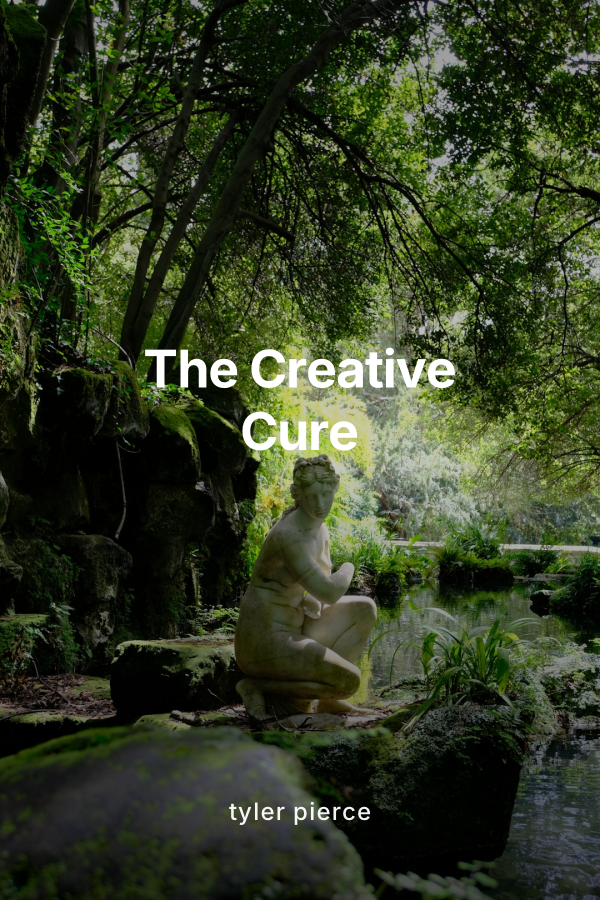
This book is a practical, deeply compassionate guide to healing emotional pain and reshaping personal identity through everyday creativity. Written in the voice of a curious, self-taught guide rather than a clinician, it offers tools, not treatment, and repeatedly reminds readers that it is not a substitute for professional therapy. The Creative Cure invites readers to use art, writing, and music as accessible pathways for exploring difficult experiences, understanding emotions, and gradually transforming the story they tell about who they are.
At its core, the book is built around a simple five-stage process: Express, Explore, Connect, Rewrite, Integrate. Readers first learn how to safely express inner experiences through simple creative exercises. They then explore what those expressions reveal, connect past events with present patterns, rewrite limiting narratives, and integrate new meanings into a fuller, more resilient sense of self. The tone throughout is that of a fellow traveler who has seen the limits of talking alone and discovered that creative practices can access emotions that often stay beneath words.
The structure is organized into seven parts that gradually lead readers from foundational ideas to personal and collective transformation:
Part 1, Foundations of Creative Healing, explains why creativity is such a powerful tool for emotional growth. It describes how experiences are often stored as images, sensations, and fragments of memory rather than neat sentences, and how drawing, journaling, or engaging with music can act as a bridge between inner experience and conscious understanding. Readers are introduced to the three core “Creative Cure” pathways: visual art, writing, and music. They also learn that creative exploration does not require talent, training, or perfection, only willingness and honesty.
Part 2, The Art Pathway, helps readers use simple visual expression to access and regulate emotion. Through approachable exercises such as drawing the present moment, before-and-after images of life changes, hidden images that reveal what is rarely shown to others, and the “survivor portrait,” readers learn to externalize feelings that may have been overwhelming or vague. The emphasis is on symbolism and authenticity rather than beauty. Art becomes a safe container for experiences like fear, confusion, and resilience, allowing people to observe and interact with their emotions rather than remain submerged in them.
Part 3, The Writing Pathway, focuses on the power of words to bring emotional clarity. Readers are guided through free writing, turning point reflections, and compassionate letter-writing to past and present selves. These practices help transform scattered impressions into coherent narratives and reveal patterns of belief formed in moments of pain. The book normalizes messy, imperfect writing and encourages readers to prioritize truth over polish. By the end of this section, many will have begun drafting a new, more empowering account of their life story that honors both suffering and strength.
Part 4, The Music Pathway, explores how sound and song can unlock memory, emotion, and identity. Readers create personal “life soundtracks” that trace key seasons of their lives, select turning point songs that capture pivotal experiences, and design regulation playlists to support themselves when overwhelmed. The section culminates in the creation of a personal anthem, a song that represents the person they are becoming and the qualities they want to embody. Music becomes both a mirror of the past and a compass for the future.
Part 5, Emotional Integration, brings the three pathways together to help readers work with grief, anger, shame, and other complex feelings. Rather than offering clinical analysis, the book provides practical, trauma-informed exercises for acknowledging loss, understanding anger as a signal of violated boundaries, and gently challenging shame-based beliefs. Readers are encouraged to notice recurring emotional patterns in their creative work and to ask how those patterns once protected them and whether they still serve today. This section emphasizes that integration means allowing emotions to be part of the story without letting them dominate the present.
Part 6, Identity Transformation, shifts the focus from survival to growth. Readers learn to distinguish between “what happened” and “who I am,” and are invited to consider how painful experiences may have contributed to resilience, empathy, and new priorities. Through mapping identity across past, present strengths, and future qualities, as well as imagining a “future self” five years ahead, they begin to construct a broader narrative that moves beyond trauma-based identity. The book draws on widely known ideas about post-traumatic growth, while carefully noting that these concepts originate in psychological research and should be properly attributed elsewhere.
Part 7, The Creative Healing Movement, places personal healing within a larger cultural context. It highlights how humans have always used creativity to process pain long before formal psychology existed, and argues that simple creative practices can complement professional support and expand access to emotional understanding in everyday life. Readers are encouraged to continue using art, writing, and music as daily practices, to share their creative work in safe communities when ready, and to see themselves as part of a quiet movement toward greater empathy and emotional literacy. The final chapters emphasize that no special credentials are required to engage in this kind of inner work, only curiosity, consent, and care for one’s own limits.
Throughout, The Creative Cure maintains a clear boundary: it offers tools for self-reflection, not diagnosis or treatment. A prominent full-page disclaimer and recurring safety notes encourage readers to seek professional help when facing intense distress or crisis, while still empowering them to use creativity as a lifelong resource. Combining grounded explanations, step-by-step exercises, and a warm, entrepreneurial tone that never pretends to be clinical, this 300–400 page work positions itself as a practical, motivational self-help book. It is designed to help readers reclaim their stories, reconnect with their inner resources, and discover that creativity can be one of the most reliable allies in transforming pain into meaning.