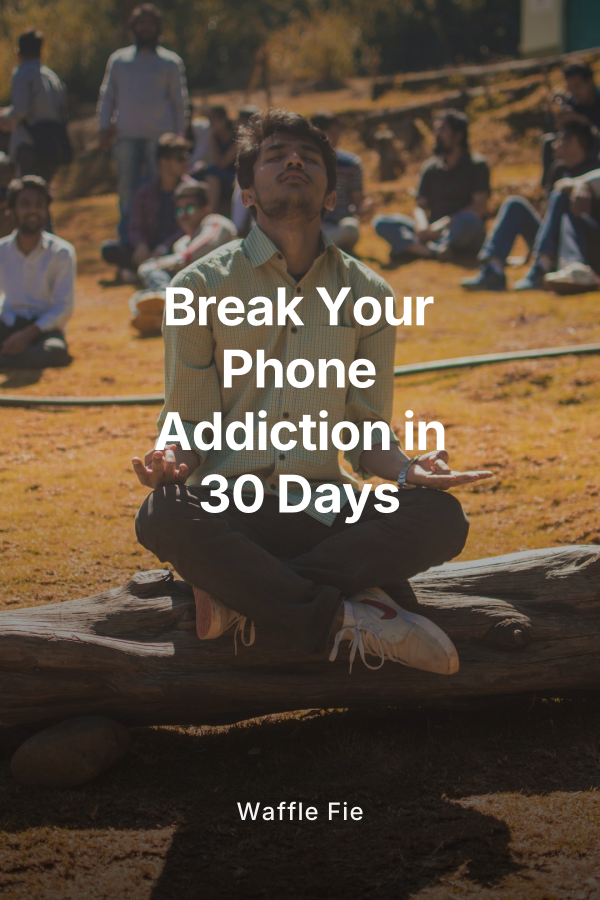
This book is a focused, 30 day blueprint that helps teens and students take back control from their phones without asking them to give up technology or disconnect from their friends. Built around a simple weekly structure Awareness, Reduction, Replacement, and Control it shows young people exactly what to do each day to cut screen time, boost focus, and reclaim their time and attention for school, hobbies, and real life.
Written in a direct, motivational voice, the book explains how apps are designed to hook the brain’s reward system and why constant notifications and endless scrolling quietly sabotage grades, sleep, mental health, and self confidence. Instead of shaming or blaming, it treats phone addiction as a habit loop that can be rewired through small, consistent actions. Teens and students learn how dopamine and quick digital rewards shape their urges and how a gradual “dopamine reset” can restore their ability to enjoy deeper, more satisfying activities in the real world.
The 30 day reset is divided into four stages that build on each other:
• Week 1 Awareness: Readers start by facing the truth about their current phone use. They check screen time reports, identify their most used apps, track how often they pick up their phones, and ask why they reach for it so often. They create phone free zones like the bedroom, dinner table, and study area, and experiment with grayscale mode to make their screens less stimulating. By the end of the week, they can clearly see which apps waste time, when they are most vulnerable to distraction, and how their phone affects their mood and energy.
• Week 2 Reduction: With awareness in place, readers begin to actively cut their usage. They delete at least one time wasting app, set realistic daily screen time limits, and commit to no phone in the first minutes after waking and in the final hour before sleep. They turn off autoplay on video apps, use timers for social media, and challenge themselves to spend one full evening completely phone free. This week proves that they can live without constant checking and that they feel calmer and more focused when the phone is not in control.
• Week 3 Replacement: Instead of just saying “no” to the phone, this stage teaches them what to say “yes” to. For every boredom scroll, they choose a replacement habit such as reading, walking, journaling, stretching, or a creative hobby. They set daily focus blocks with the phone in another room, carry a notebook instead of using the notes app, delay urges to check for five minutes, and spend time outdoors without their device. Nighttime scrolling is swapped for reading and they plan a half day digital detox. Phone time is not simply reduced, it is traded for activities that build skills, confidence, and real life memories.
• Week 4 Control: The final stage helps teens and students lock in their new relationship with technology. They move chargers out of the bedroom, create daily phone free blocks in the morning and evening, and limit social media checks to set windows instead of constant grazing. Do Not Disturb becomes a standard tool during deep work and study sessions. They schedule weekly phone free activities like hiking, sports, or reading sessions, review their progress since Day 1, and identify remaining problem apps to limit or remove. By Day 29, they design their own permanent phone rules that fit their life and goals, then celebrate on Day 30 not for perfection, but for intentional, confident use of technology.
Throughout the book, teens and students are reminded that the goal is not to become a “digital monk” or to abandon their social circles. The goal is freedom the ability to decide when and how to use their phone instead of being pulled into it by habit. A simple daily progress tracker helps them log screen time, pickups, most used apps, phone free hours, and how they felt each day, turning the reset into a personal experiment that they can watch improve over time.
The motivational tone speaks directly to the real pain points of young people today. It tackles stolen study time, late night scrolling that ruins sleep, the constant urge to check notifications, and the feeling of never being fully present with friends and family. Each chapter reassures them that these struggles are common and fixable, then gives them a clear action to take that very day.
By the end of the 30 days, readers have:
• Noticeably lower screen time and fewer mindless pickups
• Stronger focus for homework, exams, and creative projects
• Better sleep from healthier night routines
• More time for hobbies, in person friendships, and rest
• A personal set of phone rules that reflect their values and goals
Most importantly, they come away with proof that they can change their habits even when the world around them is built for distraction. Break Your Phone Addiction in 30 Days becomes a practical guide and a personal pep talk for any teen or student who feels stuck to their screen yet secretly wants their life back.