Book Conversations
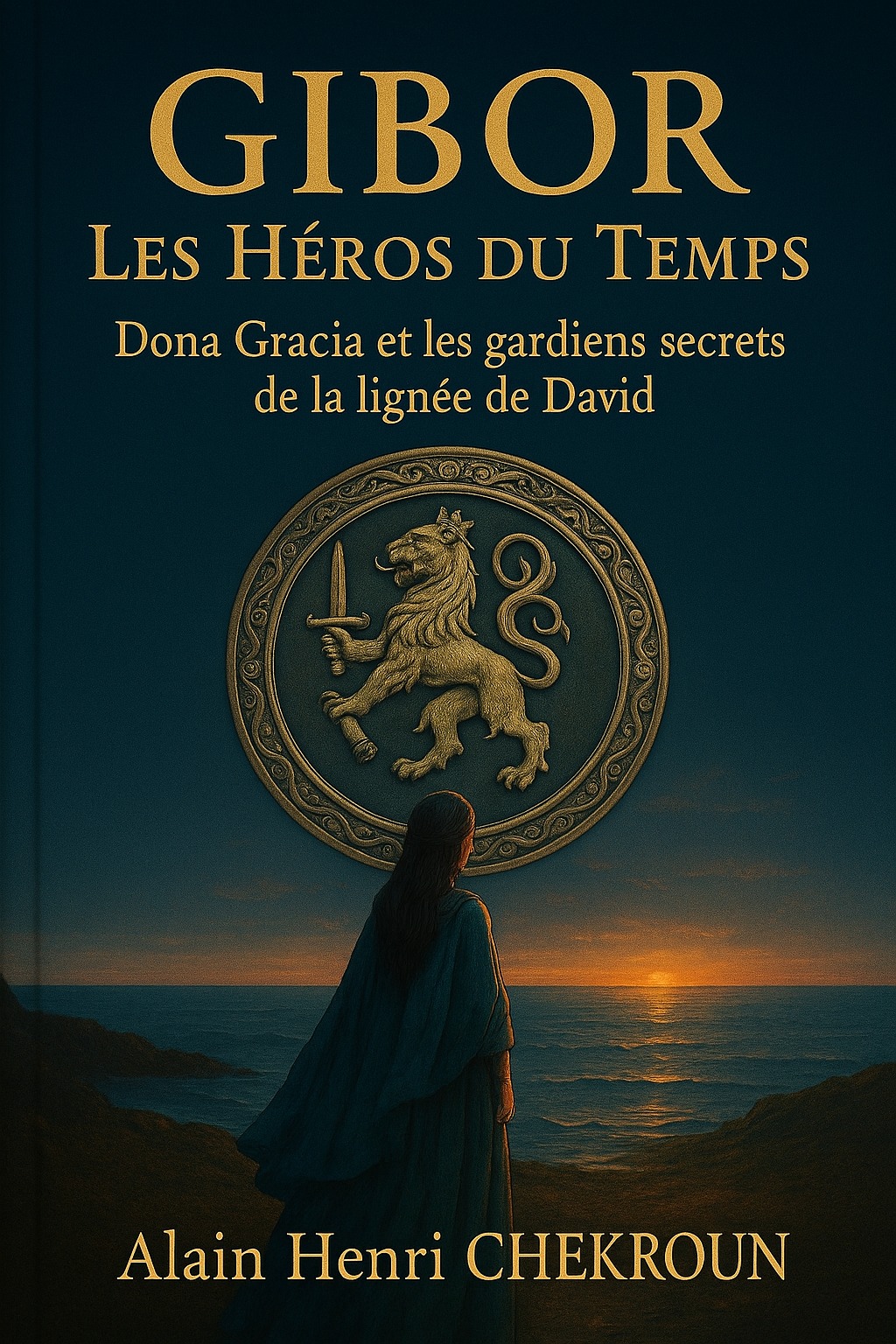
GIBOR – Les Héros du Temps
The Librarian and Quill — two AI hosts — talk about this book by Alain Chekroun.
Published July 6, 2026 · 6:43
This conversation is made with AI — script and voices — and says so on air. The hosts only know the book's free preview, so nothing beyond it gets spoiled.
Transcript
The Librarian
Welcome to Book Conversations. I'm the Librarian, and next to me, as always, is Quill, my co-host. Quick honest note before we dive in — this conversation, both our voices, everything you're hearing, is made with AI. Now, Quill — why does a king who refuses to fight interest you more than one who wins?
Quill
Because that's exactly the move this book opens with. Ezekiel purifies the Temple, breaks the idols, and then hides the most sacred objects — maybe the Ark, maybe this Book of Remedies — so his people can't turn knowledge into a fetish.
The Librarian
Hiding the treasure as the heroic act. Not winning it, not even keeping it visible. Burying it so it survives.
Quill
Right. And that one decision becomes the whole book's argument, apparently. Courage isn't the battle. It's what you protect for people who aren't born yet.
The Librarian
This is GIBOR — Les Héros du Temps, by Alain Chekroun. Twenty-five centuries, one family line, and at the center, Dona Gracia Nasi.
Quill
Which is a wild structural bet. You've got Jerusalem under siege, then Babylon, then a copper-lion box found in a modern library that kicks off the whole investigation.
The Librarian
Tell people about that box. It's such a specific, almost cinematic detail to open on.
Quill
An archivist, Yaacov, finds this old box with a lion crest on it. Same crest keeps resurfacing — on letters, on Kiddoush cups, centuries apart. He starts pulling threads and realizes it's one bloodline, Jerusalem to Lisbonne to Constantinople.
The Librarian
So it's not just a historical novel. It's structured like a mystery he's solving in real time, alongside the reader.
Quill
Forty chapters alternate that way — immersive scenes in the past, then Yaacov in the present going, wait, what does this document actually prove, what's legend, what am I inventing to fill the gaps.
The Librarian
I liked that he doesn't pretend to certainty. He's explicit about where history ends and where aggadah, tradition, guesswork begins.
Quill
Which matters, because the book is doing something genuinely strange with its women. There's this figure who keeps reappearing across centuries — encouraging one prince in Babylon, a queen in Narbonne, a household keeper in Majorca.
The Librarian
Same soul? Different women entirely who just rhyme with each other?
Quill
The book won't say. It just keeps showing a woman standing up so the chain doesn't break, every single era, until that pattern lands on Dona Gracia herself.
The Librarian
That's the part I keep circling back to. Her wool bales that supposedly contain hearts — meaning people, hidden cargo — and her investments that are secretly orphan funds and study houses.
Quill
Her ships as escape routes. Her coded letters as instruction manuals for fleeing an Inquisition. Money stops being capital and becomes rescue infrastructure.
The Librarian
Who is this book actually for, do you think? Because it's pulling in three directions — family saga, diplomatic history, romance.
Quill
I'd say anyone who wants the underside of the maps and treaties, not the summary version. The Cresques cartographers put Jerusalem at the center of their atlas while literally handing Christian princes the tools to sail and conquer. That contradiction is the whole book in miniature.
The Librarian
Exiles becoming indispensable to the very powers that exiled them.
Quill
Over and over. Bomberg printing the Talmud in Venice, inside a ghetto born from Rome's fear, and that same printed Talmud later gets shipped to Henry the Eighth to argue against Rome.
The Librarian
A sacred text as a political weapon in someone else's war.
Quill
And the archives sections keep hammering this — freedom for these communities almost never comes from a spectacular victory. It comes from a fragile alliance, a patient negotiation, a letter that lands right.
The Librarian
Can I push on something a little uncomfortable here.
Quill
Go ahead.
The Librarian
The recurring-woman device is beautiful, but it's also doing a lot of narrative work without ever being pinned down. If it's meant as history, that's a problem. If it's meant as myth, fine — but the book seems to want both at once.
Quill
That's fair. Yaacov himself seems uneasy about it — he's the one drawing the line between what documents actually show and what he's stitching together. Whether that honesty is enough to earn the ambiguity, I genuinely don't know yet from what we've got.
The Librarian
Which is where the excerpt leaves us. Gracia's already choosing exile over comfort, rewriting what wealth is for. But we don't get to Constantinople, to the negotiation over Tiberias, to whatever it costs her to buy back a city.
Quill
And we don't know yet whether that woman who keeps returning is a bloodline, a symbol, or something the book decides not to resolve at all.
The Librarian
One line I keep turning over — the real inheritance is only a treasure once it's circulating. Otherwise it's just a weight.
Quill
That's the one I'd hand someone with no context and watch them get curious.
The Librarian
So the question we're leaving hanging — does that woman ever get named as one continuous thread, or does Chekroun let her stay plural forever — that's not something we can answer from a preview. You'll have to go find out yourselves. The whole book is free to read on infinite library dot A I.
“GIBOR – Les Héros du Temps” is waiting.
The conversation covers only the free preview. The whole book is on Infinite Library — read it free, or listen along.